Blogs
Flexible Plywood Supplier in Delhi: A Complete Guide to Bend Ply for Modern Interiors
Flexible Plywood Supplier in Delhi: Complete Guide to Bend Ply
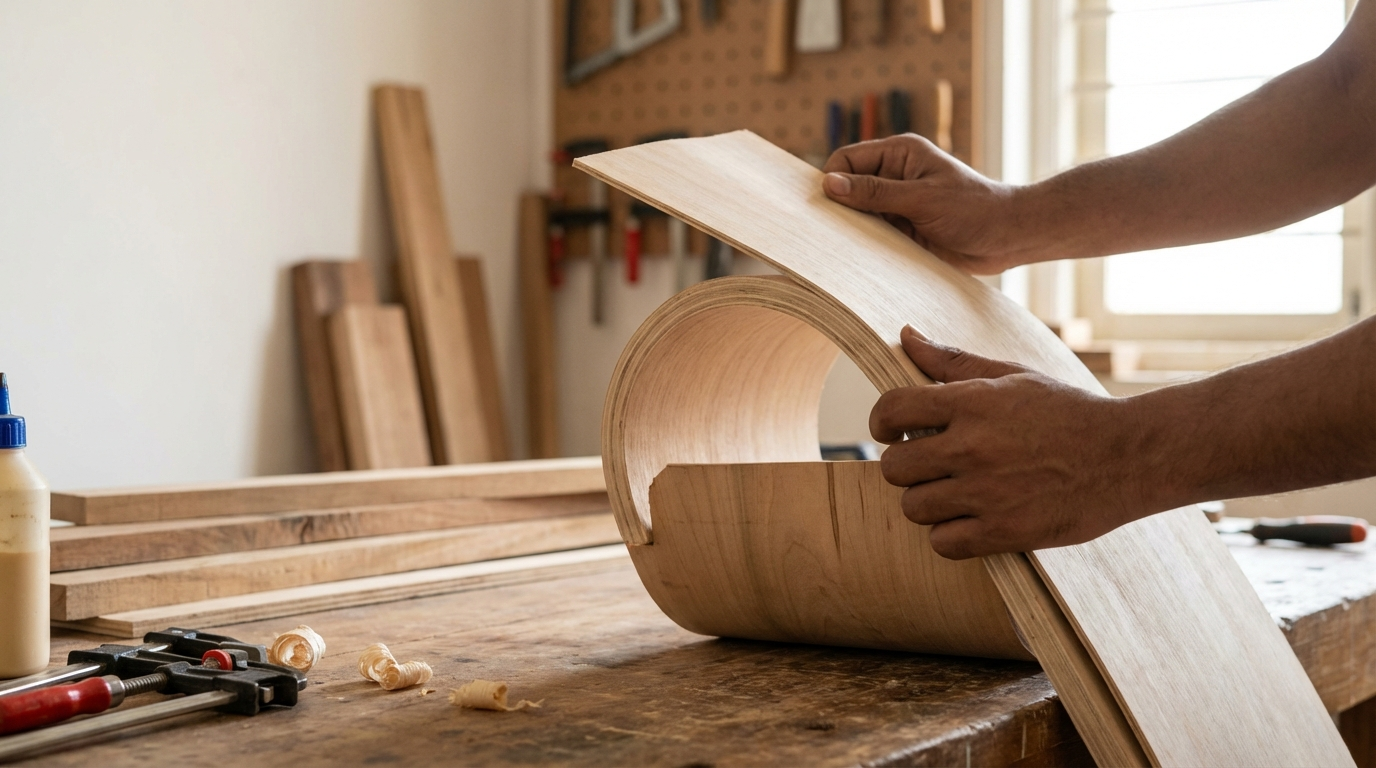
Flexible plywood, also known as bend ply or flex ply, is specially engineered plywood designed to bend into curved forms without breaking. It is commonly used for curved furniture, rounded counters, arched doors, wall panels, display units, ceilings and other interior elements where conventional rigid plywood cannot easily create smooth curves.
1. What Is Flexible Plywood?
Traditional plywood is designed to remain relatively rigid. That makes it suitable for flat furniture panels, cabinets, partitions and construction applications. But when a design requires a curve, bend or rounded surface, conventional plywood can become difficult to work with.
This is where flexible plywood comes in. Also known as bend ply or flex ply, it is specially engineered so that the sheet can be curved into different shapes while maintaining its structural integrity.
OneWood describes flexible plywood as a material that allows designers to move beyond rigid structures and create smooth curves and fluid forms.
Depending on the construction and application, flexible plywood can be used to create curved furniture, rounded reception counters, arched doors, curved wall panels, decorative ceilings, cylindrical structures, display fixtures, custom cabinetry, curved partitions and decorative architectural elements.
This makes it particularly useful for architects, interior designers, furniture manufacturers and contractors working on customised interiors.
2. Why Flexible Plywood Is Becoming Popular in Modern Interiors
Modern interior design is moving beyond straight lines and conventional rectangular furniture. Curves are increasingly being used to make spaces feel softer, more fluid and visually distinctive.
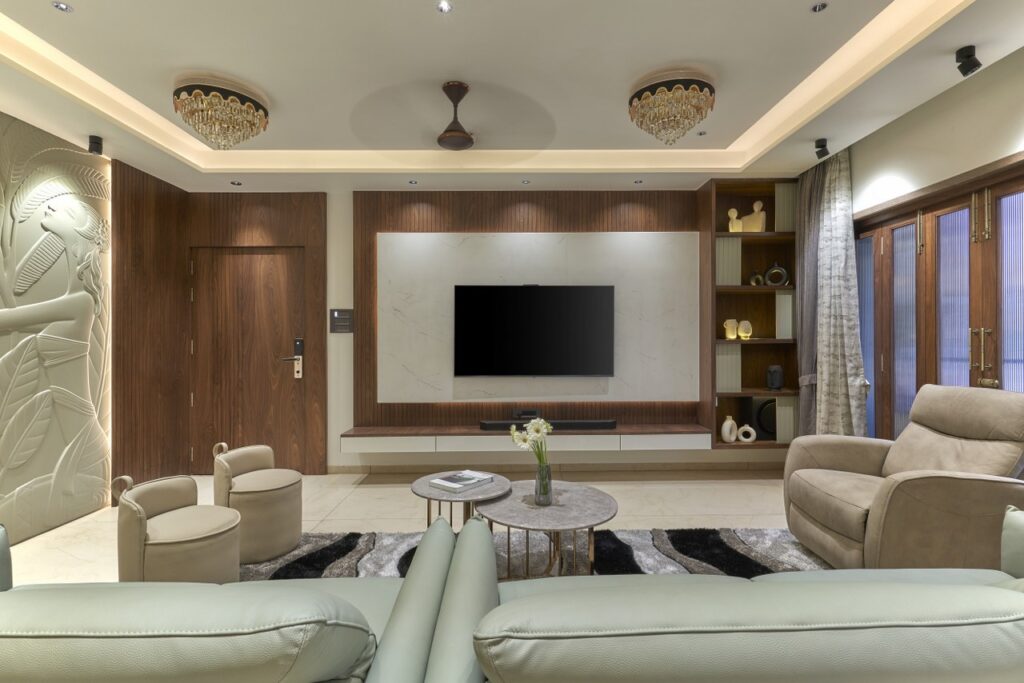
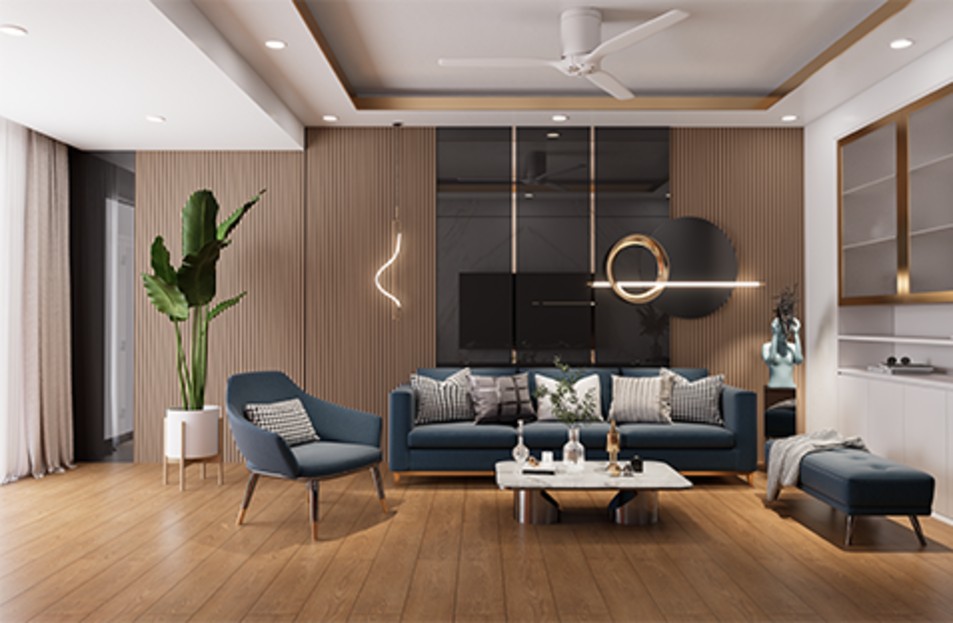
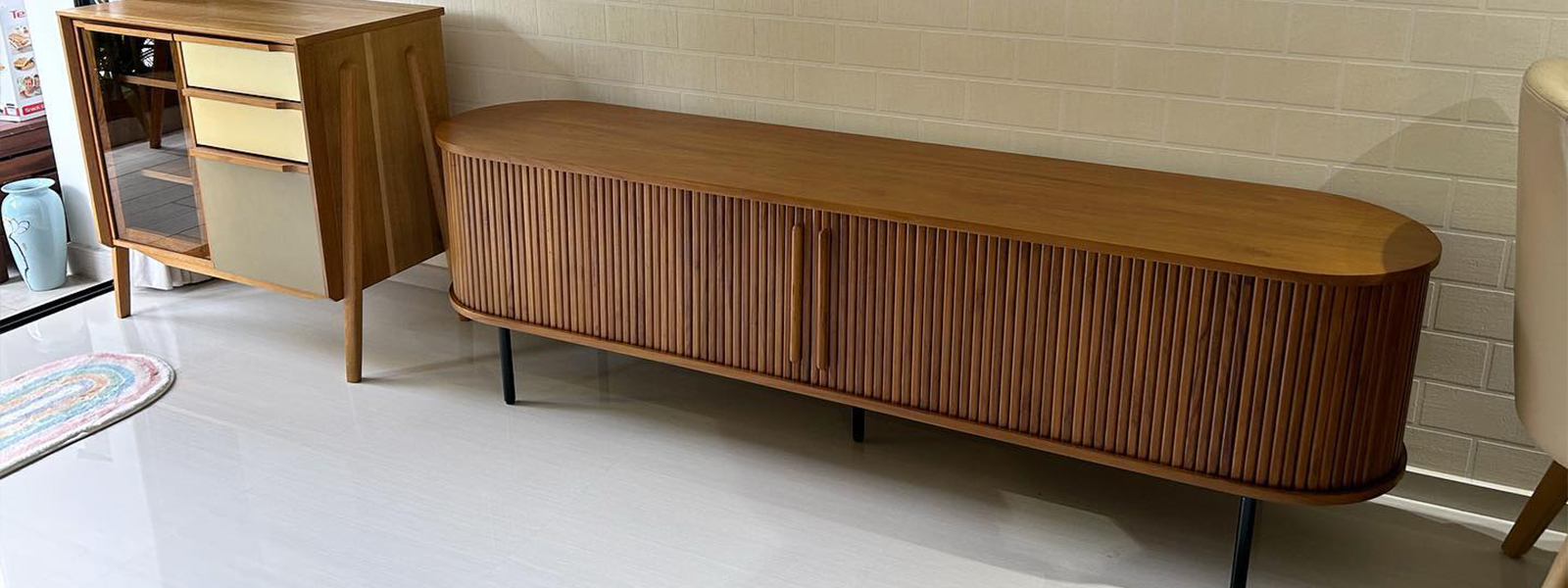
You can see this approach in rounded sofas, curved kitchen counters, arched doorways, circular reception desks, curved TV units, fluted curved walls, rounded partitions and organic furniture designs.
Creating these forms with standard plywood can require additional cutting, joining and fabrication. Flexible plywood simplifies the process because the sheet itself is designed to bend.
Design Freedom – One of the biggest advantages of bend ply is design flexibility. Instead of restricting the design to straight surfaces, designers can experiment with curves and flowing forms.
Smooth Curves – Flexible plywood can help create smoother transitions around curved structures.
Easier Handling – OneWood highlights flexible plywood as lightweight and easy to handle and install, making it practical for curved interior applications.
Compatible With Different Finishes – OneWood specifies that its flexible plywood is suitable for laminates, veneers and paint finishes. This means the bendable structure does not have to compromise the final visual appearance.
3. What Should You Look for in a Flexible Plywood Supplier?
Searching for a flexible plywood supplier in Delhi can give you many options. However, not every plywood supplier will have the right material for specialised curved applications. Before ordering, consider the following factors.
-
1. Flexibility – The most important consideration is how effectively the plywood can bend for your intended application. Different designs require different bending radii. Discuss the required curve with the supplier before selecting the sheet.
-
2. Thickness Options – Thickness affects both flexibility and structural performance. OneWood's flexible plywood page currently lists thickness options in the 4 mm–12 mm range in its specifications, while its FAQ also references thinner 3 mm, 4 mm and 6 mm bend-ply options. Because the published information varies by section, confirm the exact available thickness for your project before ordering.
-
3. Surface Finish – The surface should be suitable for the finish you intend to apply. Depending on the project, you may want veneer, laminate, paint or decorative finishes.
-
4. Sheet Quality – Look for sheets with consistent construction and a surface appropriate for your application. Poor-quality material can make bending and finishing more difficult.
-
5. Application Support – A good supplier should understand how flexible plywood is used in furniture and architectural interiors. This becomes especially important for custom projects.
-
6. Retail and Bulk Availability – If you are a homeowner, you may require only a small quantity. Architects, contractors and furniture manufacturers may require bulk quantities. OneWood states that it supplies flexible plywood in both retail and bulk quantities and offers delivery across Delhi NCR.
4. Common Applications of Flexible Plywood
| Application | How Flexible Plywood Is Used |
|---|---|
| Curved Furniture | Curved chairs, rounded cabinets, curved tables, sofa structures, designer and decorative furniture panels |
| Reception Counters | Provides the underlying form for curved counters before the final surface finish is applied |
| Curved Wall Panels | Base for veneer, laminate or paint finishes to add depth and movement |
| Arched Doors | Helps create the required curved form for arched and rounded doors |
| Retail Displays | Curved shelves, display walls and branded installations |
| Hospitality Interiors | Bar counters, reception areas, decorative walls, seating structures and ceiling details |
| Boat and Speciality Interiors | Curved interior structures where bending capability is important |
5. Flexible Plywood vs Regular Plywood
| Factor | Flexible Plywood | Regular Plywood |
|---|---|---|
| Main purpose | Curved applications | Mostly flat applications |
| Flexibility | Designed to bend | Relatively rigid |
| Ideal for | Curved furniture and structures | Cabinets, furniture and construction |
| Design possibilities | High for curved forms | Best for straight forms |
| Finishing | Veneer, laminate, paint | Veneer, laminate, paint |
| Fabrication | Suitable for curves | Better for flat panels |
| Typical use | Curved walls, counters, furniture | Cabinets, wardrobes, partitions |
If the design is primarily flat, conventional plywood may be more appropriate. If the design requires a continuous curve, flexible plywood can provide a more practical starting point.
6. How to Choose the Right Flexible Plywood
-
Step 1: Define the curve.
-
Step 2: Determine the thickness.
-
Step 3: Select the finish.
-
Step 4: Check the substructure.
-
Step 5: Test a sample.
-
Step 6: Calculate quantity.
-
Step 7: Confirm delivery.
7. Benefits of Using Flexible Plywood
1. Greater Design Freedom – It allows architects and designers to create shapes that are difficult with standard plywood.
2. Smooth Curved Forms – The material can be shaped into curved structures without relying entirely on multiple small pieces.
3. Lightweight Construction – OneWood describes flexible plywood as lightweight and easy to handle.
4. Multiple Finishing Options – The material can be finished with veneer, laminate or paint according to OneWood's published specifications.
5. Suitable for Custom Furniture – Furniture designers can use it to create distinctive forms and customised pieces.
6. Useful for Architectural Details – Curved walls, counters, ceilings and partitions can benefit from bendable sheet materials.
7. Supports Modern Design – As interiors move towards softer shapes and organic forms, flexible plywood gives designers another material option for achieving these forms.
8. 2026 Design Trends Using Curved Surfaces
Organic Shapes – Instead of relying exclusively on sharp rectangular forms, designers are introducing softer organic shapes.
Rounded Furniture – Curved sofas, tables, cabinets and seating structures can make interiors feel more fluid.
Arched Openings – Arched doors and passageways can become architectural focal points.
Curved Feature Walls – A curved wall can create depth and help divide spaces without creating a completely rigid partition.
Sculptural Reception Areas – Commercial spaces are using more sculptural reception desks and counters to create memorable first impressions.
Curved Ceiling Elements – Bendable materials can also support decorative ceiling forms and transitions.
Wood and Curves – Combining curved geometry with natural veneer can create a warm yet contemporary interior. This is particularly useful for luxury furniture, hospitality interiors and premium residential projects.
9. Common Mistakes When Buying Flexible Plywood
Choosing thickness without considering the curve — a thicker sheet may not necessarily be the right choice for a tight curve.
Not measuring the required radius — the supplier needs to understand the shape the plywood must achieve.
Ignoring the final finish — a surface intended for veneer may require different preparation than one intended for paint.
Ordering large quantities without testing — a sample bend test can help identify fabrication issues before bulk production.
Using flexible plywood for every application — for standard flat cabinets or furniture panels, conventional plywood may be more appropriate.
Ignoring the supporting structure — the curved sheet is only one part of the finished construction; the underlying support must also be properly planned.
Not confirming available thickness — availability can vary by supplier and product range, so confirm the exact specification before ordering.
10. Why Choose OneWood Surfaces for Flexible Plywood?
For customers searching for a flexible plywood supplier in Delhi, OneWood Surfaces offers flexible plywood as part of its broader wood-surface product range. The company describes its flexible plywood as suitable for curved applications and highlights flexibility, smooth surface finishing, lightweight handling and design freedom.
OneWood's wider product portfolio includes:
Flexible plywood
Plywood
Veneer
Laminates
Flush doors
Blockboard
OneWood also states that it works with interior designers, architects and contractors across Delhi NCR and offers bulk supply for commercial projects. For a curved interior project, this can make it easier to discuss the structural sheet and final surface finish together.
11. Flexible Plywood Supplier in Kirti Nagar, Delhi
OneWood Surfaces is located in Kirti Nagar Timber Market, Delhi, an established destination for wood and interior materials.
Showroom Address:
1/68, Timber Market, Kirti Nagar, Block I, Ware Housing Scheme, Kirti Nagar, Delhi.
OneWood states that it delivers across Delhi NCR, including Delhi, Gurgaon, Noida, Faridabad and Ghaziabad. Delivery timelines and charges depend on order size and requirements.
The company also states that customers can visit its experience centre and request material samples for project requirements. For architects, interior designers, contractors and furniture manufacturers, seeing the material physically can be useful before finalising a large order.
12. FAQs
Flexible plywood, also called bend ply or flex ply, is specially engineered plywood designed to bend into curved forms without breaking. It is used for curved furniture, architectural features, wall panels and other applications requiring smooth bends.
Flexible plywood is available from OneWood Surfaces at its Kirti Nagar Timber Market location in Delhi. The company states that it supplies both retail and bulk quantities.
It can be used for curved furniture, arched doors, reception counters, wall cladding, display fixtures, ceilings and other curved interior elements.
OneWood's current flexible-plywood page lists thickness options from 4 mm to 12 mm in its specifications, while its FAQ references 3 mm, 4 mm and 6 mm options. Confirm the current stock and exact thickness required for your application before ordering.
Yes. Flexible plywood is used for curved furniture and can be structurally strong once it is fixed and bonded into its intended curved position.
Yes. OneWood lists veneers among the finishing materials compatible with its flexible plywood.
Yes. OneWood specifies laminate compatibility for its flexible plywood.
Neither is universally better. Regular plywood is generally suited to flat applications, while flexible plywood is designed specifically for curved forms. The correct choice depends on the project.
Yes. OneWood states that it supplies flexible plywood in retail and bulk quantities and delivers across Delhi NCR.
OneWood Surfaces is located at 1/68, Timber Market, Kirti Nagar, Delhi. The company lists the location as its experience centre and accepts project enquiries.
13. Conclusion
Flexible plywood has opened up new possibilities for modern interior design. Instead of limiting furniture and architectural elements to straight lines, designers can create curves, arches, rounded counters, sculptural furniture and flowing wall treatments.
However, selecting the right flexible plywood supplier in Delhi requires more than simply comparing prices. Consider the required bending radius, thickness, sheet quality, finishing compatibility, project quantity and supplier support before making a decision.
OneWood Surfaces offers flexible plywood as part of its wider range of plywood, veneer, laminate and other wood-surface solutions. Its Kirti Nagar location and Delhi NCR delivery coverage make it a practical option for architects, interior designers, contractors and furniture professionals looking for bend ply for curved applications. The best flexible plywood is ultimately the one that matches the curve, application, finish and performance requirements of your project.
Latest Blogs